Understanding Abnormal EKG ICD-10 Codes: Complete Guide for Clinicians
By Billmate
Feb. 2, 2026, 10:07 a.m.
Introduction
Electrocardiograms (EKGs or ECGs) are among the most frequently performed diagnostic tests in modern medicine. They are fast, noninvasive, and invaluable for detecting cardiac rhythm abnormalities, ischemia, conduction disorders, and other cardiovascular concerns. However, when it comes to ICD-10 coding, abnormal EKG findings often create uncertainty for clinicians, coders, and billing teams. The challenge lies in the fact that an abnormal EKG is not always a diagnosis. Many EKG abnormalities are nonspecific, incidental, or require further testing before a definitive condition can be confirmed. This is where accurate use of abnormal EKG ICD-10 codes, especially R94.31, becomes essential.
This comprehensive guide explains how to correctly code abnormal EKG and ECG findings, how abnormal stress tests are handled, how to document common abnormalities such as nonspecific T-wave changes or low voltage QRS, and how to stay compliant with payer expectations.
What Is an Abnormal EKG? (Clinical Context)
An EKG measures the electrical activity of the heart and translates it into waveforms that reflect atrial and ventricular depolarization and repolarization. An EKG is considered abnormal when these waveforms fall outside established normal parameters. Abnormal EKG findings may include changes in rate, rhythm, intervals, voltage, or wave morphology. Importantly, an abnormal result does not automatically mean disease. Many abnormalities are temporary, benign, or clinically insignificant on their own. From a coding standpoint, abnormal EKGs are often classified as signs or abnormal test results, rather than confirmed diagnoses. ICD-10 reflects this distinction by assigning abnormal EKGs to the R94 category rather than disease-specific cardiovascular codes.
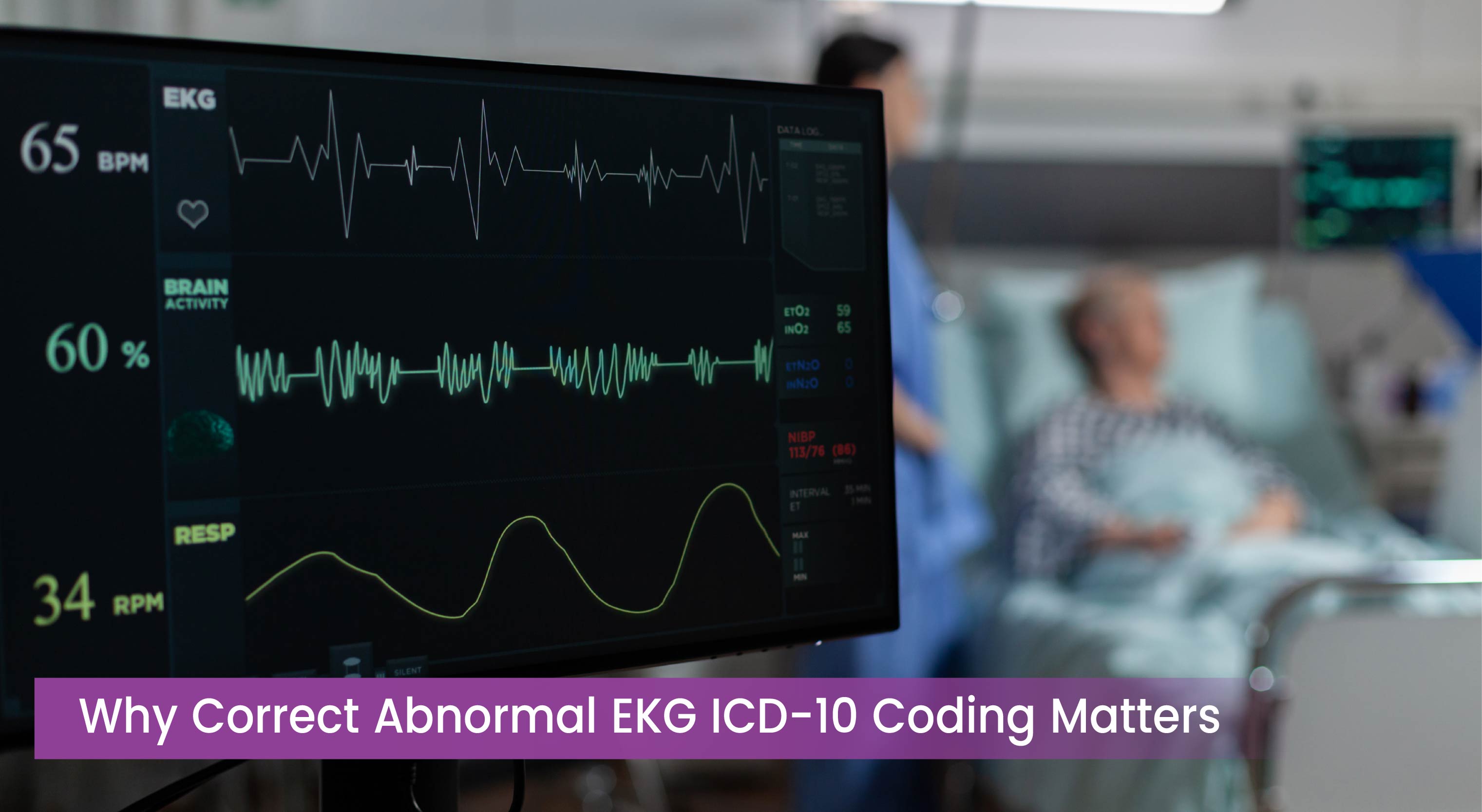
Accurate ICD-10 coding for abnormal EKG findings plays a critical role in both clinical documentation and revenue cycle management. Incorrect coding can lead to denied claims, delayed reimbursements, or compliance concerns, especially if a confirmed diagnosis is reported prematurely.
Correct coding helps to:
- Accurately reflect diagnostic uncertainty
- Support medical necessity for additional testing
- Prevent upcoding and audit risk
- Maintain continuity in the patient’s medical record
Payers and regulators expect abnormal test results to be coded as such until a definitive diagnosis is established.
Primary ICD-10 Code for Abnormal EKG: R94.31
R94.31 Diagnosis Code Explained
R94.31 – Abnormal electrocardiogram [ECG] [EKG] is the primary and most widely used ICD-10 code for abnormal EKG findings.
This code is appropriate when:
- The EKG or ECG result is abnormal
- The abnormality is nonspecific or incidental
- No confirmed cardiac diagnosis has been made
R94.31 is a sign and symptoms code, not a disease code. It represents an abnormal test result rather than an underlying condition.
When to Use R94.31 (Key Scenarios)
R94.31 should be used in situations such as:
- Abnormal screening EKG during routine evaluation
- Preoperative EKG showing unexpected abnormalities
- Incidental ECG changes noted during unrelated visits
- Initial abnormal findings prompting further workup
Once a definitive diagnosis is confirmed, R94.31 should be replaced with the appropriate disease-specific ICD-10 code.
ICD-10 Code for Abnormal ECG vs Abnormal EKG
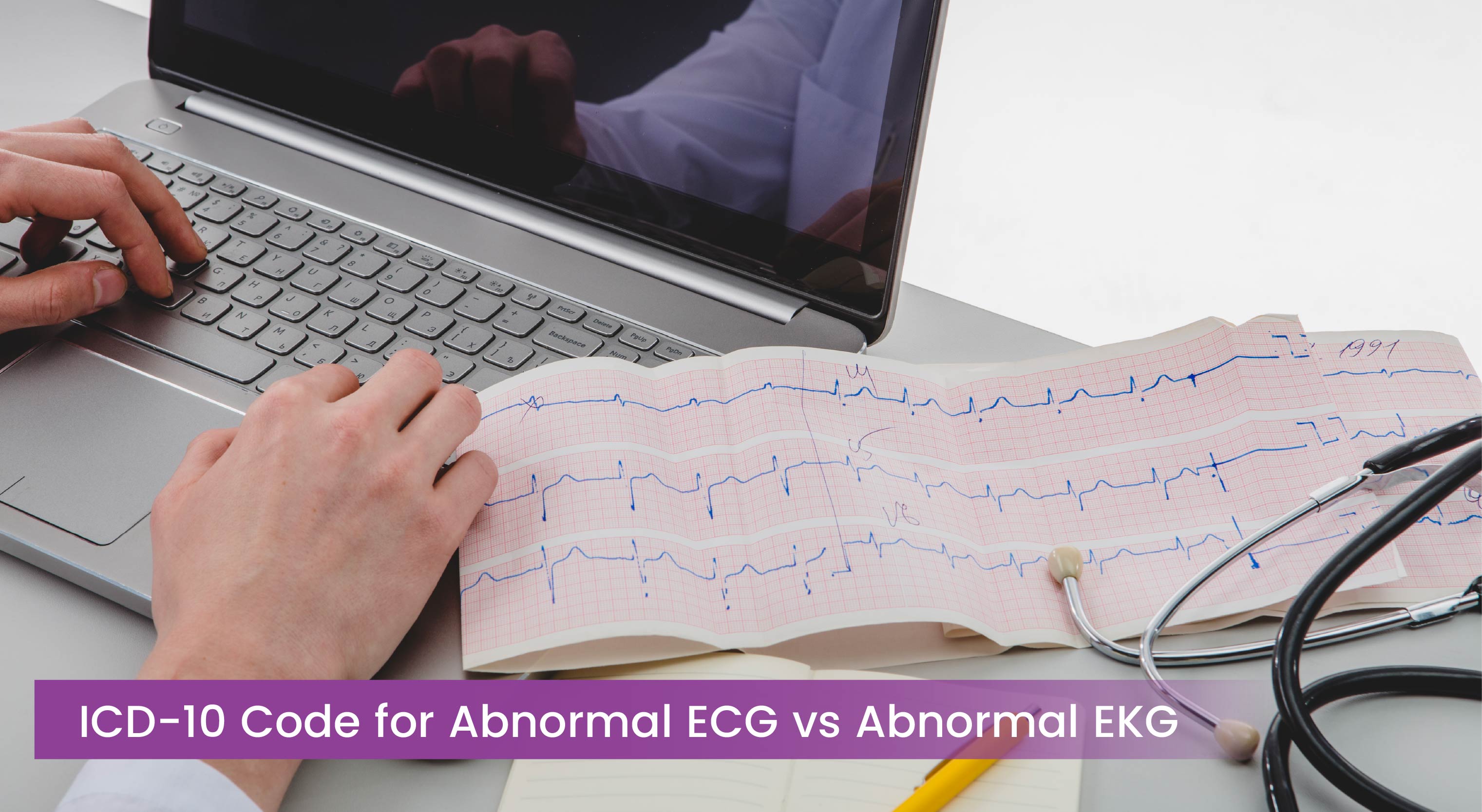
Clinically, ECG and EKG refer to the same diagnostic test. ICD-10 does not distinguish between the two terms.
- ICD-10 code for abnormal ECG: R94.31
- Abnormal electrocardiogram ICD-10: R94.31
- Abnormal EKG ICD-10: R94.31
These terms are interchangeable in documentation and coding.
ICD-10 Code for Abnormal Stress Test
When a cardiac stress test (exercise or pharmacologic) produces abnormal findings without a confirmed diagnosis, the correct ICD-10 code is typically:
R94.39 – Other abnormal results of cardiovascular function studies
This code is commonly used as the ICD-10 code for abnormal stress test results.
Abnormal EKG Vs Abnormal Stress Test Codes
While both codes represent abnormal cardiac testing, they apply to different situations:
R94.31
Used for abnormal resting ECG/EKG
Often incidental or screening-related
R94.39
Used for abnormal stress tests or other cardiovascular function studies
Often associated with exertional findings
Using the correct code depends on which test was abnormal, not the suspected diagnosis.
Common Abnormal EKG Findings and Coding Approach
Nonspecific T-Wave Abnormality ICD-10
Nonspecific T-wave changes are among the most common abnormal EKG findings. These changes may be related to electrolyte imbalance, medications, or benign variants.
From a coding perspective:
- These findings are typically coded as R94.31
- They should not be coded as ischemia or infarction unless clinically confirmed
- Clear documentation stating “nonspecific” supports appropriate use of symptom-based coding.
Low Voltage QRS ICD-10
Low-voltage QRS complexes may be associated with various conditions, including obesity, pericardial effusion, or pulmonary disease. However, the finding alone does not establish a diagnosis.
Coding considerations:
- Use R94.31 when a low-voltage QRS is noted without confirmed pathology
- Further diagnostic testing may later justify disease-specific codes
- Avoid assigning definitive diagnoses unless supported by clinical evidence.
Other Common Abnormalities (General Guidance)
Abnormalities such as axis deviation, prolonged QT interval, or incomplete conduction delays should generally be coded as R94.31 unless a specific condition is diagnosed.
Abnormal EEG ICD-10 vs Abnormal EKG ICD-10
A frequent documentation and coding error is confusing the EEG (electroencephalogram) with EKG/ECG. Abnormal EEG ICD-10 codes fall under neurologic categories (G-series codes). Abnormal EKG ICD-10 uses R94.31. These tests measure entirely different physiologic processes and must never be coded interchangeably.
When NOT to Use Abnormal EKG ICD-10 Codes
There are clear situations where R94.31 should not be used.
Do not use abnormal EKG codes when:
- A definitive cardiac diagnosis is documented
- The abnormality is expected and clinically insignificant
- The EKG is normal
For example, once atrial fibrillation, myocardial infarction, or bundle branch block is confirmed, the appropriate cardiovascular ICD-10 code must replace R94.31.
Documentation Best Practices for Abnormal EKG Coding
Strong documentation is essential to support abnormal EKG ICD-10 coding. Documentation should clearly explain what was abnormal and why it matters.
Effective documentation typically includes:
- Specific EKG findings (not just “abnormal”)
- Clinical context (screening, symptoms, pre-op, etc.)
- Assessment acknowledging uncertainty
- Plan for follow-up or additional testing
This level of detail supports medical necessity and protects against denials.
Medical Necessity and Payer Expectations

Payers expect abnormal EKG ICD-10 codes to be used as interim codes, not permanent diagnoses. Guidance from the Centers for Medicare & Medicaid Services emphasizes that abnormal test results justify further evaluation but should not be treated as confirmed disease. Similarly, professional guidance from the American Academy of Professional Coders reinforces that symptom-based codes are appropriate until clinical confirmation is achieved.
Billing Implications of Abnormal EKG ICD-10 Codes
Using the correct ICD-10 code for abnormal EKG findings:
- Supports reimbursement for diagnostic services
- Reduces claim rejections
- Maintains accurate risk adjustment
- Minimizes audit exposure
Incorrect coding creates significant compliance risk.
Common Coding Errors to Avoid
Some of the most frequent errors include:
- Continuing to use R94.31 after diagnosis is confirmed
- Coding ischemia without clinical confirmation
- Confusing EEG and EKG codes
- Using abnormal stress test codes for resting ECGs
- Vague or incomplete documentation
Regular coding audits help identify and correct these issues early.
Clinical Scenarios and Correct Coding Examples
Scenario 1:
Routine screening EKG shows nonspecific ST-T changes; the patient is asymptomatic.
→ Code: R94.31
Scenario 2:
Exercise stress test shows abnormal response; diagnosis pending.
→ Code: R94.39
Scenario 3:
EKG confirms atrial fibrillation.
→ Code: I48.x (not R94.31)
How Accurate Coding Supports Better Patient Care
Accurate abnormal EKG coding supports:
- Appropriate diagnostic pathways
- Avoidance of premature disease labeling
- Clear clinical communication
- Evidence-based decision-making
Coding accuracy is not just administrative; it directly supports clinical quality and patient safety.
How Expert Billing Support Can Help
Given the nuances of diagnostic coding, many practices rely on professional billing and coding support to ensure compliance. Expert teams assist with:
- ICD-10 code selection
- Documentation improvement
- Denial prevention
- Ongoing regulatory updates
Frequently Asked Questions (FAQs)
1. What is the ICD-10 code for abnormal EKG?
The primary code is R94.31.
2. What does the R94.31 diagnosis code mean?
It represents an abnormal ECG/EKG result without a confirmed diagnosis.
3. What ICD-10 code is used for an abnormal stress test?
Typically R94.39.
4. Can R94.31 be used for nonspecific T-wave changes?
Yes, if no definitive diagnosis is established.
5. Is an abnormal EEG coded the same as an abnormal EKG?
No. EEG and EKG use entirely different ICD-10 categories.
Conclusion
Understanding abnormal EKG ICD-10 codes, particularly R94.31, is essential for accurate clinical documentation, compliant billing, and effective patient care. These codes serve as placeholders during diagnostic evaluation and must be used thoughtfully to reflect uncertainty without overdiagnosis. By combining precise documentation with correct ICD-10 selection, clinicians and healthcare organizations can reduce denials, avoid audits, and maintain high standards of cardiovascular care.
Facing denials or confusion around abnormal EKG coding?
What To Read Next

By Billmate | March 11, 2026
How to Read a Health Insurance Card in 2026: Complete Guide for Patients & Providers
Learn how to read a health insurance card in 2026, including policy number, member ID, group number…

By Billmate | March 10, 2026
10 Benefits of Hiring a Medical Billing Company in the USA
Discover the top benefits of hiring a medical billing company in the USA to improve revenue cycle m…

By Billmate | March 06, 2026
99213 CPT Code Explained: Complete Guide to Documentation, Billing, and Reimbursement
Complete guide to 99213 CPT code, documentation requirements, billing rules, reimbursement, and pro…

By Billmate | March 04, 2026
Weight Loss ICD-10 Codes Explained: A Complete Guide for Accurate Medical Billing
Complete 2026 guide to weight loss ICD-10 codes, including abnormal weight loss, unintentional weig…

By Billmate | March 02, 2026
A Complete Guide to POS 11 and Other Key POS Codes in Medical Billing
Comprehensive 2026 guide to POS 11 in medical billing and other key POS codes, including POS 22, 23…
Join our team to be a part
of our story
Learn more about our career, education and
posting jobs, and
submit simple application.